
Transform Your Exterior & Interior Spaces: Modern Wall Cladding Ideas & Materials Guide
Wall cladding has evolved from a simple protective layer into a core element of modern architectural design. Whether you are remodeling a residential home, designing a commercial property, or sourcing materials for large-scale development projects, selecting the right wall cladding design enhances curb appeal, boosts thermal insulation, and increases overall property value.
In this comprehensive guide, we explore the top wall cladding materials, trending design applications, and how to choose the most durable solution for your space.
What Is Wall Cladding and Why Is It Essential?
Wall cladding involves installing an outer protective layer of material onto a building’s exterior façade or interior walls. Beyond its obvious aesthetic appeal, high-performance cladding serves as a weather barrier—shielding structures from heavy rain, harsh sunlight, UV rays, and temperature fluctuations.
Primary Applications:
Exterior Building Façades: Weatherproofing and exterior elevation upgrades.
Interior Accent Walls: Creating focal points in living rooms, bedrooms, and reception areas.
Commercial Exteriors: Durable cladding for hotels, resorts, office complexes, and retail storefronts.
Comparing Popular Wall Cladding Materials
Choosing the right cladding material depends on your project's balance between aesthetics, budget, climate exposure, and long-term maintenance requirements.
1. Wood-Plastic Composite (WPC) Cladding
As a modern alternative to natural timber, WPC wall cladding combines recycled wood fibers and high-density polymers. It delivers the warm, authentic appearance of real wood while eliminating common wood flaws.
Best For: Exterior façades, poolside accent walls, balcony ceilings, and commercial projects.
Pros: 100% waterproof, termite-proof, UV-resistant, fire-retardant, low maintenance (no painting or staining required).
Cons: Higher upfront cost compared to basic PVC, but significantly lower long-term lifecycle cost.


2. Natural Wood Cladding
Timber offers timeless organic beauty and natural warmth, making it popular for luxury residential designs.
Best For: Premium residential feature walls and rustic interiors.
Pros: Authentic wood texture, eco-friendly appeal, easy to customize with stains.
Cons: Susceptible to moisture rot, termite damage, warping, and requires continuous sealing and sanding.
3. Natural Stone & Veneer Cladding
Stone cladding adds texture, weight, and a sense of permanence to building elevations.
Best For: Fireplaces, villa entrances, and rustic exterior accents.
Pros: Extremely durable, weather-resistant, timeless aesthetic.
Cons: Heavy structural weight, complex installation process, and higher material and labor costs.
4. Brick & Terracotta Cladding
Offers an industrial, classic brick aesthetic suitable for loft-style spaces and traditional exteriors.
Best For: Industrial-style interiors, café walls, and classic building façades.
Pros: High structural strength, excellent fire resistance, minimal maintenance.
Cons: Limited color variations and difficult to modify once installed.
5. Metal Cladding (Aluminum & Steel)
Sleek, industrial metal panels are widely utilized in modern architecture and commercial builds.
Best For: Contemporary high-rises, modern homes, and industrial parks.
Pros: Lightweight, highly durable, fireproof.
Cons: Prone to denting upon impact, prone to heat absorption in hot climates.
Trending Wall Cladding Design Layouts
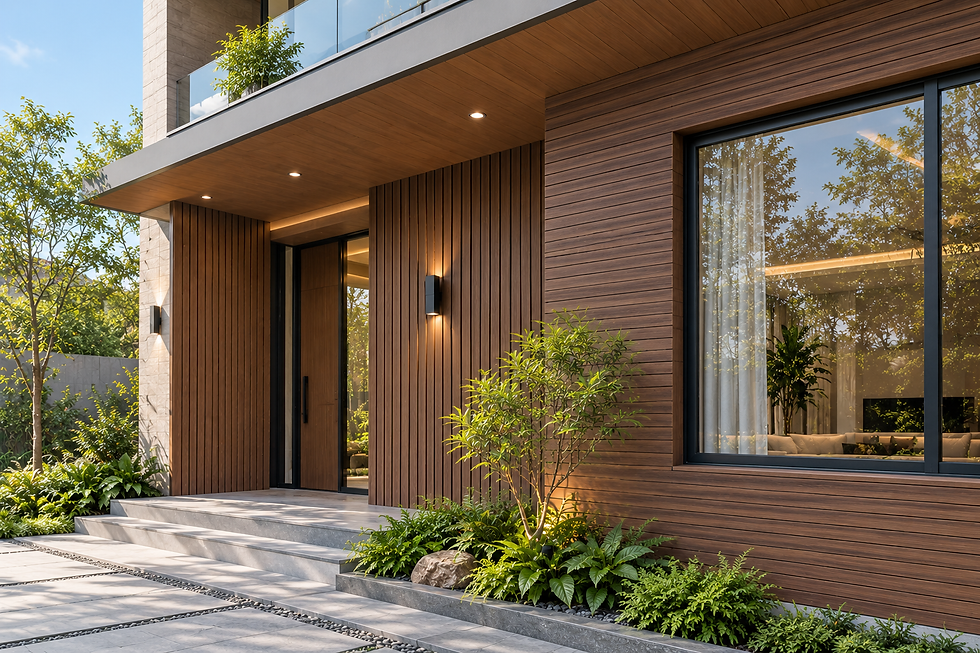
1. Vertical Fluted & Slat Panels (3D Slat Design)
Vertical WPC or wood slat paneling draws the eye upward, creating a sense of vertical height and sleek architectural depth. It is currently one of the most requested trends for modern living rooms and hotel lobbies.

2. Horizontal Overlap / Lap Siding
Horizontal paneling provides a wide, grounded appearance that makes exterior façades and garden walls look visually expansive.

3. Mixed Material Contrast
Pairing warm WPC wood-grain cladding with cool grey concrete or natural stone creates striking visual balance and a high-end luxury finish.
4. Seamless Flush Panels
Smooth, interlocking panels provide a clean, continuous surface line—ideal for minimalist, Scandinavian, or contemporary modern architectural styles.
Why Modern Projects are Switching to WPC Cladding
While traditional timber and stone remain popular, architectural trends are shifting toward Co-Extruded Wood-Plastic Composite (WPC) due to its performance in extreme weather conditions. WPC provides the perfect balance: the visual warmth of natural wood without the structural degradation caused by humidity, rain, and UV exposure.
Partner with SM VERA COMPOSITE (Vietnam)
At SM VERA COMPOSITE, we manufacture high-grade WPC wall cladding, decking, and outdoor privacy solutions engineered for global climate standards. Based in Vietnam, we offer direct factory pricing, flexible customization, and competitive trade tariffs for international importers, contractors, and distributors.
Looking to source premium WPC wall cladding for your next project?
📩 Contact SM VERA COMPOSITE today for trade catalogs, technical specifications, and factory-direct quotes!


Comments